Passing Through the World - ALWAYS ON THE WAY
This is a travel story I'm writing a full year late. A debacle co-directed by gray haze, ticket "assassins," and a bout of food poisoning.
Last winter — also in January — we came off a Singapore-Malaysia-Thailand run (Singapore | Rainy Season Travel Tips, Langkawi | Beach Strolls, Mangrove Adventures and Endless Summer, When Winter Comes, Dreaming on Koh Lipe) and flew from Kuala Lumpur to Nanning, kicking off the Guangxi trip we'd dreamed about for ages.
This Guangxi trip began with dozens of "ceiling-level" (top-tier) guides bookmarked on my phone. Friends love to tease me about my "travel luck blessed by the gods," so I mapped what counts as a classic loop: land in Nanning, drive south into the karst heart of Guangxi's southwestern frontier — Chongzuo — then swing back to Nanning through Jingxi and Baise.
I'd pictured a "painting of a thousand miles of mountains and rivers," all mist and jade. The trip that followed handed me travel PTSD that needed a full year to fade.
So here's how it went...
Day 1: We touched down in Nanning. Hardly out of Wuxu Airport in the car, Brother Dong realized his brand-new earbuds were still sitting on the AirAsia seat. He phoned the airport in a panic. I've lost things and gotten them back before, so I assumed they'd turn up — but the final word came back: not found. Maybe that's where the bad luck took root.
Once we'd dropped our bags, the first move was downstairs for a bowl of rice noodles. Fresh beef, fatty beef, tenderloin, beef brisket — a different bowl each, slurped with the kind of contentment only travel-day hunger brings.
Day 2: Viral photo spots held no pull for us, so our Nanning day went like this — most of it on Qingxiu Mountain, a late lunch at the hyped Zhezhe Village on the way down, then the "Nanning Fire Show" at the Shuiyang Market Grand Stage after dark.
Qingxiu Mountain — also the Nanning Botanical Garden — sprawls green and generous. Thick with plant species and breathing out oxygen, it's an easy, lovely family wander. The Millennium Cycad Garden and the Rainforest Grand View are the standouts, and the plant-labeling is genuinely educational. Come in through the East Gate this time of year and the light treats your camera kindly.
After the long walk we rode straight down to the buzzy Zhezhe Village. In blistering clay pots, fresh ingredients meet scallions, ginger, garlic, and sauce; a splash of yellow wine flares the surface into a charred, fragrant crust. One bite — sauce deep and glossy, edges crisp against tender flesh. Delicious, delicious!
That evening we drifted to Shuiyang Market for the "Nanning Fire Show" — a mash-up of intangible-heritage iron-flower spraying, fire pots, fire dancing, fire sticks, fire breathing, and fire wheels. Pulsed by driving music, performed by cool, lithe dancers almost in your lap, it landed as pure, burning romance.
But good stretches are short, and the "assassins" always show up when you've stopped watching.
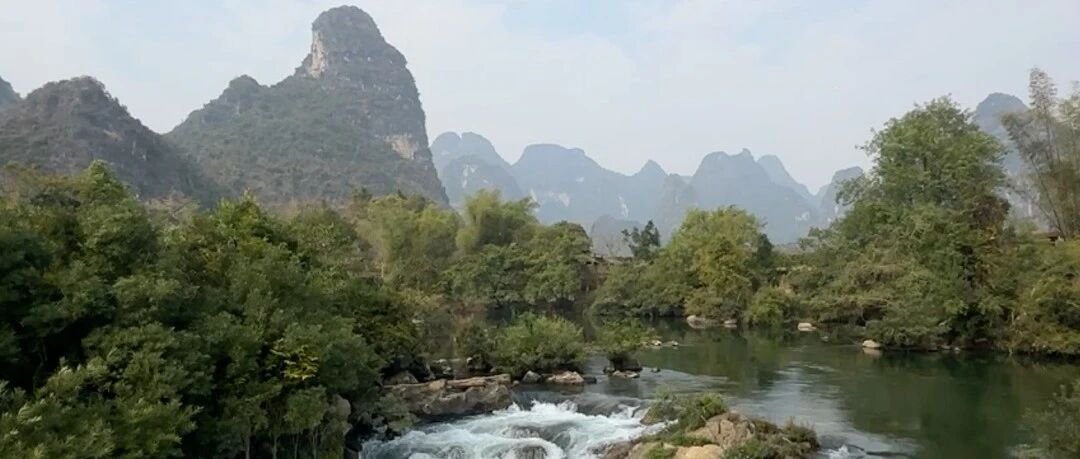
Day 3: We pointed the car south toward Chongzuo, out in Guangxi's southwestern fringe. First stop, Dongnayu Bay — splashed all over social media as emerald water ringed by peaks. Along the way I sniffed for that damp, grassy scent of the Eight Gui region, but what caught in my nose was the faint, burnt bite of dust.
Dongnayu Bay Scenic area ticket + one-way boat ticket: Adult 160 RMB, Child 130 RMB
The only way to really see it is by boat. But once we pushed off, the glassy water I'd imagined had turned a dull, lifeless gray-green. The guide explained that with barely any rain for three or four months that winter, the Black Water River had sunk low and the sugarcane crop had suffered. Along the banks, some plants had yellowed at the edges, their reflections smearing into the murk. None of the "Guilin on Water" sparkle was anywhere to be felt.
I asked the guide what was burning in the fields. Sugarcane stalks, she said. Not one of those "ceiling-level" guides had warned a clueless Northerner like me that Guangxi sets its sugarcane stubble alight every winter. No wonder the sky hung there like frosted glass that nothing could ever wipe clear.
We paid 450 RMB for a fairyland and got a marked-down sketch. I won't pretend to recommend this spot — the value is dismal.
Mingshi Scenic Area Scenic area ticket: Adult 120 RMB, Child 60 RMB
That evening we reached Mingshi Scenic Area, where the assassin donned a gentler mask. Bamboo rafts drifted by, a Zhuang girl's voice rang clear and bright — but the peaks she pointed to stayed swallowed in gray. I skipped the little bamboo raft; I couldn't feel that "green summit clear overhead, the boat riding atop the green peak" magic, and I wasn't about to pay for a flat landscape twice.
Restaurants line the road. We were still deciding when the unmistakable smell of roast suckling pig drifted over from a stall — a big plate was mandatory. The skin cracked at the first bite, rich without a trace of grease, absurdly tender, and it took the edge off the scenery's betrayal. After dark we caught a free ethnic show at Mingshi; rough around the edges, maybe, but the performers' fiery warmth carried the evening.
Day 4: Up at first light, we rented a sidecar motorcycle. Dad drove, the little one rode the sidecar, and both of them glowed. We went to scope out Fish Scale Dam, but the weather was flat and charmless — the sugarcane juice, at least, was syrupy sweet. Everything here was fine except the one thing we'd come for: the scenery.
Detian Transnational Waterfall Scenic area ticket + sightseeing bus ticket: Adult 115 RMB, Child 75 RMB
The lone bright spot was Detian Transnational Waterfall, and it earns its title as Asia's largest cross-border fall. Even the grim weather couldn't touch it. The volume was staggering, the water splitting the China-Vietnam line (November to February is dry season; aim to enter between 12:00 and 14:00). For once, I felt the ticket had been worth every yuan.
On the way back, the shuttle ran along the China-Vietnam border. I pointed across to Thea — that's another country, Vietnam; their flag carries just one five-pointed star. She lit up: her second border ever, after the China-Korea line along the Yalu River.
After leaving Detian Transnational Waterfall, we drove to Equan (Goose Spring) in Jingxi.
Equan (Goose Spring) Scenic area ticket: Adult 46 RMB, Child 35 RMB (no ticket needed early morning or evening)
Under cloud and haze, the pastoral scroll around Goose Spring had bled of color, like an old calendar left too long in the sun. We could only imagine what it should have looked like.
The bamboo raft was just 10 RMB a head. We floated through the bridge arch in the photo above — not a bad deal at all.
Dinner consoled me again. The owner's homemade cured meat was superb — a shame they won't sell it on its own; I'm still thinking about it.
Day 5: We pressed on north. Fields burned on every side, smoke coiling upward and laying another veil over the already gray sky. At Quyang Lake the water looked even barer in the haze. I'd seen other people's Quyang Lake on social media — the one in front of me genuinely broke me.
The next stop on the plan was the gorgeous Haokun Lake from other people's cameras. But the forecast showed Baise overcast, all of Guangxi overcast — and overcast skies almost never make beautiful scenery. So, like beaten soldiers, we quit heading north and fled south to Fangchenggang, praying the sea might salvage the trip.
And yet, after eight hours and 388 kilometers to reach Fangchenggang, we met the deadliest assassin of them all.
We ate at a decent-rated Korean BBQ place, but deep in the night it landed the whole family a brutal blow — food poisoning. All three of us went down: vomiting, the runs, dizzy and weak, pinned to the hotel beds.
Day 6: A night of misery left us still wrecked. To finish it off, the Beibu Gulf rain fell without end, sea and sky melting into one flat gray, and I went full emo. Dongxing Port and Exotic Style Street nearby lost all appeal. The body's collapse dissolved the whole point of the trip in an instant. Budget, guides, expectations — before the sheer force of being ill, they shattered into nonsense.
After so many trips, this was the first time I wanted to go home. Immediately. Right then.
Day 7: We hauled our half-empty health bars back to Nanning with one day left. I'd dropped every expectation — just wandered. At the Nanning Zoo we met the gloriously real "Throw-That-Gorilla."
Brother Dong told me this gorilla is an internet star, famous for hurling things at visitors. We started watching. At first it did nothing while the crowd closed in, laughing, snapping photos, and mimicking its signature throw. Then it bristled, grabbed a banana peel, and flung it over — a near miss, almost caught me. And I suddenly got it: in its rawest agitation, its disdain, its sudden "talent," it was showing a vivid, stubborn life of its own.
Travel ought to be the same — carrying a vivid life that weather, ticket prices, or guides can't dim. Because luck doesn't always hold.
That evening we hit the wildly popular Yongwei Old Friend (Renmin West Road Branch) in Nanning — one bowl of old friend noodles apiece. The wok hei of sour bamboo shoots, fermented black beans, and chili under fierce heat hit us straight in the face. The woman taking orders had a fearsome temper, but the moment we finished the noodles, something in me unclenched. When scenery fails you, only the most basic appetite and the most grounded, everyday warmth can catch your falling soul.
Day 8: Heading home. Later, a mild travel PTSD seemed to set in — I didn't want to talk about Guangxi, didn't want to open those gray, hazy photos.
So, is winter Guangxi worth it? My answer: the scenery may well "assassinate" you on the weather alone, so pick your season. Chasing mountains and water in the dry season is genuinely unwise. Lower your expectations, though, and you might just be pleasantly surprised.