Passing Through the World - ALWAYS ON THE WAY
As news of the pandemic eased at home in China while the world outside grew only more uncertain, I found myself stranded indoors, watching the endless spring through my window — and my mind wandered to Uji, the matcha town southeast of Kyoto.
My reason for going to Uji in the first place was simple: I wanted to taste real matcha ice cream.
The ride from Kyoto to Uji takes barely thirty minutes. With the Keihan Railway Kyoto Sightseeing One-Day Pass in hand, the moment I stepped off the train I could feel Uji's fresh, clean air wrap around me.
The light was perfect — bright and almost glass-clear, the kind of pristine little city you half expect to step out of a Japanese drama.
Matcha Ice Cream
Cross the Uji River and you arrive at the Omotesando approach.
This main road, linking Byodoin Temple and Uji Bridge, is flanked by historic matcha shops that have stood since the Muromachi shogunate — each one carrying its own long, leaf-scented story.
At the close of the 12th century, the monk Eisai carried Chinese tea culture to Japan. Uji began growing tea in the early 13th century and grew into the country's most celebrated matcha region. The town has steeped matcha into its very soul — every bite and sip here echoes with it. For a matcha lover, it's nothing short of paradise.
And of course, the one thing no one should leave Uji without tasting is matcha ice cream!
I'd eaten matcha ice cream plenty of times in Kyoto, but the cone I bought at Nakamuratoji's Byodoin Shop on the Omotesando was the best I'd ever had — suddenly everything before tasted like 'fake' matcha. Between bites my travel companion murmured, 'Let's grab another on the way back.'
If you love matcha, don't skip Nakamuratoji's main shop. Its cafe often runs a queue, but it's worth the wait for their exclusive 'Matcha Pudding Parfait with Ice Cream.' Uji is also home to other century-old matcha houses like Marukyu Koyamaen and Itoh Kyuemon.
Byodoin Temple
Walk to the end of the Omotesando and you meet Byodoin, Japan's celebrated national treasure. At the ticket counter they asked me to finish my ice cream first. Unlike many cramped Kyoto temples, Byodoin opens up spacious and airy. Built in 1052 at the height of the Fujiwara clan, it began as the villa of Fujiwara no Michinaga and was converted into a temple by his son Yorimichi.
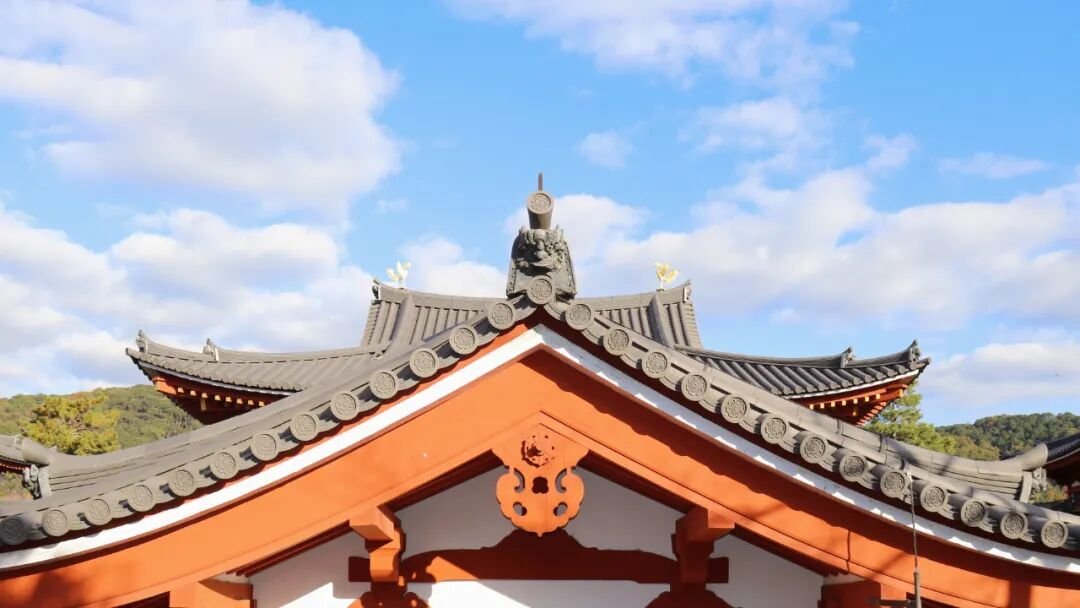
The Phoenix Hall before me was grand yet refined, perfectly symmetrical and majestic — the high point of Tang-style architecture. Completed in 1053, it was modeled on the paradise palace described in Buddhist sutras. Its surviving 11th-century statues — among them 52 cloud-borne bodhisattvas — are especially breathtaking.
The temple garden is a surviving piece of the Heian period, laid out around the Phoenix Hall and Aji Pond and borrowing the clear flow of the Uji River and the hills beyond — a composition of quiet, elegant beauty.
Here, Uji's layered history reveals itself at every turn.
Uji River
Leaving Byodoin, I followed a narrow path down to the banks of the Uji River. Its murmuring sounded exactly like the stream behind my grandmother's house when I was small. I walked out to Tachibana Island in the river park, then crossed the Asagiri Bridge, and found myself facing Uji Shrine.
But instead of the shrine, we were pulled toward the lovely sound of running water. We stepped aside, climbed down the stone steps, and half-lay back on the gentle riverbank slope, letting the warm afternoon sun wash over us. Eyes shut, completely content. The minutes slipped by and I wished time would simply stop. Only when the sun tipped west and a chill crept in did we finally get up to leave.
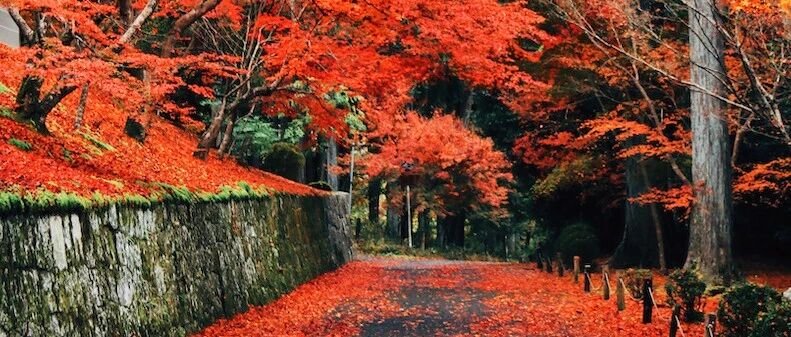
Uji does have another autumn spot, Kosho-ji Temple. But after three straight days of maple-hunting in Kyoto, our eyes were a little tired of red, so we skipped it. Instead we drifted slowly through the small lanes, soaking up a stillness different from old Kyoto — a calm, reassuring kind of quiet. Uji also has a Tale of Genji Museum for literature lovers.
Uji is small enough to see in a single day, yet it hides a surprise at every corner — the kind of place that, once visited, quietly lingers in your memory.
Practical Tips: Transportation Pass
For the trip from Kyoto to Uji, I can't recommend the Keihan Railway enough. The Keihan Railway Kyoto Sightseeing One-Day Pass is wonderfully handy — its route runs from Demachiyanagi in northeastern Kyoto all the way to Uji in the southeast, passing the autumn-foliage hotspot Tofuku-ji Temple and the famous Fushimi Inari Taisha Shrine.
Recommended purchase location: Kansai International Airport Tourist Information Center (limit one per passport)
More sales locations available at: https://www.keihan.co.jp/travel/tw/tickets/special/kyoto-osaka
With this one-day pass, beyond Uji itself, if you've energy to spare you can also reach Tofuku-ji Temple and Fushimi Inari Taisha Shrine — both essential Kyoto stops.
About Tofuku-ji: many say a Kyoto autumn without Tofuku-ji is hardly worth the trip. Its maples are justly famous — each late autumn, over 2,000 trees set the whole temple ablaze. Beautiful as it is, the crowds can fray the calm you came for.
About Fushimi Inari Taisha: it's a perennial fixture on Kyoto's must-visit lists. The shrine bristles with fox statues, but its signature is the Senbon Torii — thousands of vermilion gates packed densely together, spectacular when sunlight filters between them. Walking through, you feel like you've stepped into another world.